
Angry Smash
Tripledot Studios LimitedCasual
4.91.99K Reviews
- Version
- 1.11.3
- Installs
- 1.00M
- Age Rating
- Everyone
Screenshots
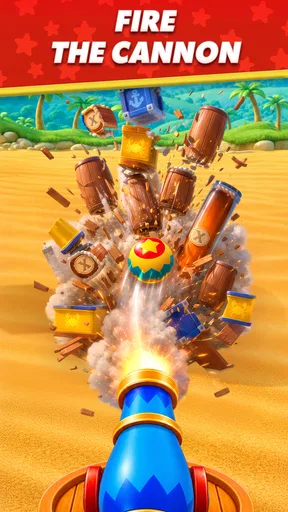
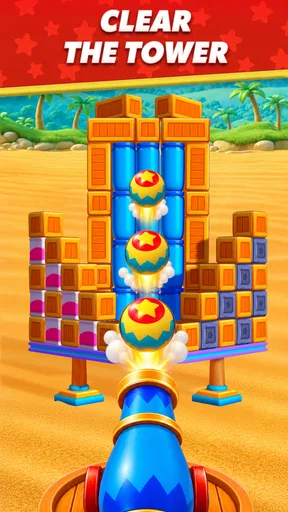
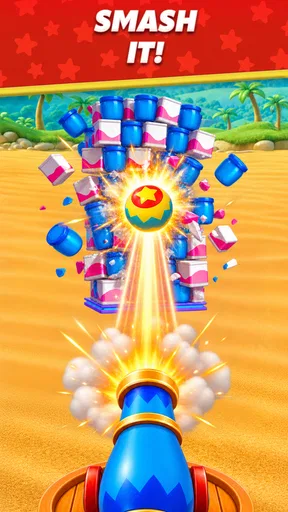
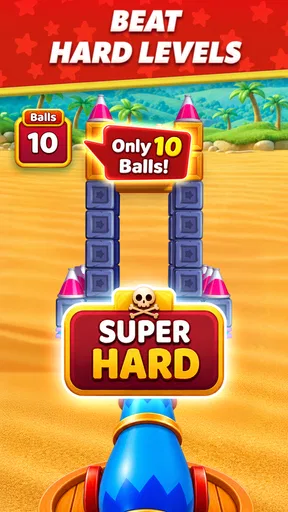
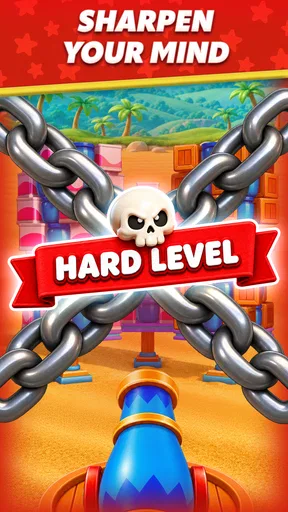
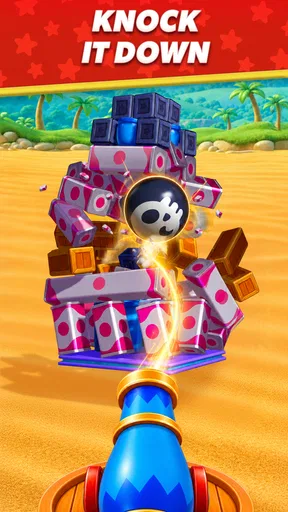
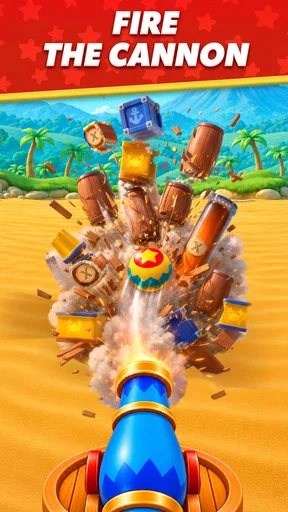
Our Review of Angry Smash
 Analysis by Appyee
I found Angry Smash most enjoyable when I treated it as a quick, focused physics puzzle rather than a game I needed to play for long sessions. The basic idea is easy to understand: aim a cannon, fire into a compact island scene, break through obstacles, and try to clear each level efficiently. That simplicity is exactly what makes it approachable, but it also means small aiming mistakes can matter more than a new player might expect.
Developed by Tripledot Studios Limited, this is a casual game for players who want an immediate challenge without learning a complicated control system. It is free to install, rated for Everyone, and currently listed as version 1.6.0. The Android requirement is 7.1 or later, so it should be accessible on many older devices as well as newer phones. The store listing shows a 5.0 average from around 7.8 thousand ratings and over 100 thousand installs, which suggests that its straightforward style has found a receptive audience.
Getting comfortable with the cannon and the island layouts
The first thing I noticed is that the game’s appeal depends on the relationship between a simple action and a satisfying result. Firing the cannon is easy to understand, but deciding where to fire is where the actual play happens. Obstacles are not just decoration: they determine whether a shot opens a route, removes a blockage, or leaves the level in an awkward state. I quickly stopped treating every shot as an attempt to hit the most obvious target and started looking at the whole arrangement before acting.
That small change in approach is useful for anyone who gets stuck early. Before firing, I recommend taking a moment to identify the obstacle that controls the largest part of the scene. A shot aimed at a central obstruction can be more valuable than one aimed at a nearby object, even when the nearby target looks easier. This is one of the game’s less obvious strengths: it rewards observation without demanding a lengthy tutorial or a complicated rulebook.
Players may also get frustrated when a shot appears close but does not produce the result they expected. In a cannon-based game, the visible target is only part of the problem. The angle, the point of impact, and the order in which obstacles are attacked can all change the outcome. When a level resists repeated attempts, I find it more productive to change the first shot completely instead of making tiny adjustments to the same plan.
That advice is especially helpful during a short break in the day. I can play a level while waiting for an appointment or during a commute pause, but I still need to give the opening layout my full attention. The game is casual in presentation, not necessarily mindless in every moment. A distracted first shot can create more work than the level itself requires.
What to do when progress seems to stop
If a level appears impossible, I first check whether I am confusing an unsuccessful attempt with a technical problem. A missed shot, an obstacle that remains in place, or a result that differs from my plan is usually part of the puzzle rather than evidence that the game has failed. Restarting with a different sequence is often the most sensible recovery.
I also avoid tapping repeatedly while waiting for the result of a shot. Fast, impatient input can make it harder to understand what actually happened, particularly when the scene is still resolving. My preferred routine is simple: fire once, watch the entire result, then decide whether the next action should continue the plan or replace it.
Another useful habit is to remember the successful parts of an attempt. If the first shot opened a useful path but the second one caused trouble, I do not need to rethink the whole level. I repeat the opening and change only the later decision. This turns trial and error into a controlled process instead of a series of random retries.
The game works best for people who enjoy that kind of small adjustment. If you prefer constant action, fast rounds, or a clear score chase with little planning, the cannon-and-obstacle format may feel slower than expected. Its satisfaction comes from understanding why a level worked, not simply from firing as quickly as possible.
Basic setup checks before blaming the game
Because this is a mobile game, the first useful checks are ordinary ones. I make sure the device meets the Android requirement, keep the operating system reasonably current, and install the latest available game version. Angry Smash is free, but it includes optional in-app purchases ranging from $0.99 to $99.99 per item. I would review purchase controls before handing the phone to a child, even though the age rating is Everyone.
If installation or updating behaves strangely, I check available storage and the device’s connection before assuming the game itself is responsible. A failed download can come from a temporary network interruption or a crowded device, while a delayed update can be caused by the app store rather than by the game. Closing other demanding apps and trying again later is a sensible first step.
For a new installation, I prefer opening the game with a stable connection and allowing it time to finish its initial setup. I do not jump immediately between the game and several other apps while it is loading. That reduces confusion if the first launch takes longer than a later launch, and it gives me a cleaner sense of whether the problem is repeatable.
Touch input deserves a quick check too. A dirty screen, a thick protector, or a case that interferes with the edge of the display can make aiming feel inaccurate. I clean the screen, hold the phone comfortably, and test whether the same gesture behaves consistently. If the cannon responds normally in one part of the game but not another, I look for a temporary software issue; if all touch controls feel unreliable, the device is the more likely source.
Recovering a disrupted play session
When a session closes unexpectedly or returns to an unusual state, I avoid immediately repeating the same action that preceded it. I reopen the game, wait for the main screen to settle, and check whether ordinary navigation works before starting another level. If the issue happens only once, it may have been a temporary interruption. If it repeats at the same point, I note exactly what I was doing, such as changing screens or finishing a shot, because that makes troubleshooting more useful.
I also avoid clearing app data as a first response. That kind of reset can remove local progress or settings, depending on how the game handles them. A safer sequence is to close and reopen the app, restart the phone if necessary, confirm that storage is not critically low, and check for an available update. Only after those simpler steps would I consider more disruptive troubleshooting, and I would do so with the possibility of losing local progress in mind.
If a level seems to have reset after an interruption, I treat the next attempt as a test rather than immediately replaying it several times. I watch whether the same scene loads consistently and whether the cannon responds normally. This helps separate a one-time loading problem from a genuine gameplay obstacle. It also prevents me from wasting time trying to solve a level that was not displayed correctly.
For purchases, patience is important. I would not repeat a transaction simply because the result is delayed on screen. I first check the store account and payment history, then allow time for the original request to finish processing. Repeating the tap can create unnecessary confusion. Since the game is free to start but offers paid items, this is one area where a calm, deliberate workflow matters more than speed.
When the phone, connection, or expectations are the real issue
Not every rough experience points to Angry Smash. Older hardware may struggle when storage is nearly full or when many apps are active in the background. Heat, low battery, and aggressive battery-saving settings can also affect how smoothly a phone behaves. If the entire device feels slow, I close background apps, let the phone cool, and test again before deciding that the game is at fault.
A weak connection can matter during installation, updates, or any part of the experience that depends on store services. I compare behavior on a stable connection rather than repeatedly retrying on an unreliable one. If other apps are also failing to download or update, the broader service or network is the more likely explanation.
There is also a difference between a limitation and a defect. Angry Smash is built around a focused cannon-and-obstacle loop. It is not the right choice if I want a deep strategy campaign, extensive character development, multiplayer competition, or a large open world. A more elaborate puzzle game may offer greater long-term variety, while a fast arcade title may be better for players who want constant movement and instant restarts.
The optional purchases are another reason to think about fit. The game can be approached as a free casual experience, but players who dislike any purchase prompts or who want a completely uninterrupted session may prefer a paid game with a simpler monetization model. I would also be cautious about installing it on a shared family device without checking the store’s purchase protections first.
How it compares with familiar casual alternatives
Compared with a traditional match-three game, Angry Smash asks for more spatial reading and less pattern matching. I am not scanning a grid for combinations; I am considering impact, obstruction, and sequence. That makes it a better fit when I want a compact problem to solve, but a less suitable option when I want a soothing rhythm that can be played almost automatically.
Compared with endless runners, it is much less dependent on reflexes. There is no need to maintain a continuous stream of movement in the same way. I can pause between decisions and examine the scene, which makes it friendlier to players who enjoy planning. On the other hand, anyone looking for a high-speed adrenaline loop may find its deliberate structure too restrained.
It also differs from large physics sandboxes. Those games may provide more freedom and experimentation, while this title keeps the focus on individual island levels and their obstacles. I like that narrower scope when I want a defined task, but I would choose a sandbox if my main goal were to build, experiment, or create my own scenarios.
The practical trade-off is clear: Angry Smash offers a low barrier to entry and a more thoughtful rhythm than many reflex games, but its appeal depends on enjoying repeated attempts and small changes in strategy. It is strongest as a pick-up-and-play puzzle, not as a replacement for a broad, content-heavy game.
Who will get the most from it
I would recommend it to casual players who like seeing a plan turn into a physical result. It suits short sessions, especially when I want something more engaging than passive scrolling but do not have time to learn a complex system. The Everyone rating also makes it approachable for a broad audience, although adults should still manage purchase settings when children use the device.
It is particularly good for players who naturally ask, “What happens if I remove this obstacle first?” That question captures the game’s central pleasure. The best progress comes from testing the structure of a level, not from firing without thought. Someone who enjoys small experiments and visible cause-and-effect will probably find more depth here than the simple premise suggests.
I would skip it if I become irritated by retries, if I need a story to maintain interest, or if I want every session to offer a radically different activity. The island setting and cannon mechanic give the game its identity, but they also define its limits. Familiarity can become a weakness for players who need constant novelty.
My practical verdict after playing
Angry Smash is a clean casual choice for short, hands-on puzzle sessions. Its strongest quality is the way it turns one cannon shot into a small decision about order, angle, and consequence. I appreciate that I can understand the goal immediately while still having reasons to rethink a level after an unsuccessful attempt.
My advice is to install it when you want a focused distraction, then approach the levels patiently. Check the device and connection if setup is troublesome, avoid destructive resets when a session goes wrong, and separate ordinary missed shots from genuine technical problems. Those habits make the experience less frustrating and help reveal whether the game’s deliberate trial-and-error style suits you.
For me, the final decision comes down to expectations. This is not a deep strategy epic or an endless action game, and it should not be judged as one. It is a free casual title from Tripledot Studios Limited that works best when I have a few minutes, a clear screen, and the mood to solve a compact obstacle puzzle. If you enjoy planning one shot ahead and learning from a failed attempt, Angry Smash is worth trying; if you want variety, story, or uninterrupted high-speed action, another genre will serve you better.
Privacy and Permissions
See what permissions an app requests and how it handles your data.
- Phone
- read phone status and identity
- Photos/Media/Files
- read the contents of your USB storage, modify or delete the contents of your USB storage
- Storage
- read the contents of your USB storage, modify or delete the contents of your USB storage
- Wi-Fi connection information
- view Wi-Fi connections
- Device ID & call information
- read phone status and identity
- Other
- view network connections, full network access, control vibration, prevent device from sleeping, Google Play license check
Verdict
Strengths of Angry Smash
- Simple controls make the game easy to pick up and play.
- Short levels are convenient for quick gaming sessions.
- Colorful visuals give the action a cheerful, accessible style.
- Progression encourages players to keep improving their scores.
- Offline play makes it suitable for gaming without an internet connection.
Limitations of Angry Smash
- Gameplay can become repetitive after extended play sessions.
- Difficulty may feel uneven across some levels.
- Ads can interrupt the experience, especially between rounds.
- Limited customization reduces variety for long-term players.
- Some devices may experience occasional performance issues.
Other Releases by Tripledot Studios Limited
View All
Woodoku - Wood Block Puzzle
Puzzle4.2

Get Color - Water Sort Puzzle
Puzzle4.8


Nut Sort: Color Sorting Game
Puzzle4.8
Similar Picks in This Category
View All
My Talking Angela
Outfit7 Limited4.2

My Talking Tom
Outfit7 Limited4.3

Pou
Zakeh4.2

My Talking Tom 2: Pet Game
Outfit7 Limited4.3

Candy Crush Saga
King4.6

Bridge Race
Supersonic Studios LTD4.1
Frequently Asked Questions
What is Angry Smash, and how does the gameplay work?
Angry Smash is an action-focused mobile game built around quick levels, destructive challenges, and simple touch controls. After installing it, players typically guide characters or attacks through obstacles, enemies, or targets while trying to cause as much impact as possible. The gameplay is easy to understand, but later stages can require better timing, positioning, and strategic use of available abilities.
Is Angry Smash free to download and play?
Angry Smash can generally be downloaded without an upfront purchase, allowing players to try the main gameplay at no initial cost. However, the free version may include advertising, optional purchases, or other limitations depending on the platform and current release. Before downloading, it is worth checking the store listing for the exact in-app purchase structure and whether any paid items affect progression.
Does Angry Smash require an internet connection?
The basic gameplay experience may be available offline, which is useful when you want to play during travel or without mobile data. Nevertheless, some features can require an internet connection, including advertisements, cloud services, online events, updates, rankings, or purchases. Availability may also change between versions, so players should test the game offline after installation rather than assuming every mode works without connectivity.
Is Angry Smash suitable for children?
Angry Smash may be easy for younger players to control, but suitability depends on the specific content, age rating, and advertising included in the version available in your region. The game can contain cartoon-style destruction, combat, or exaggerated effects. Parents should review the official store rating, check privacy details, and consider enabling purchase restrictions if children will play on a shared Android or iOS device.
What devices are compatible with Angry Smash?
Compatibility depends on the version of Angry Smash and the requirements published on the Google Play Store or Apple App Store. In general, the game should run on relatively recent Android and iOS devices, although performance can vary according to processor speed, available storage, operating-system version, and memory. Keeping the device updated and closing background apps may help reduce loading problems or slowdowns during play.
Play our best games!


